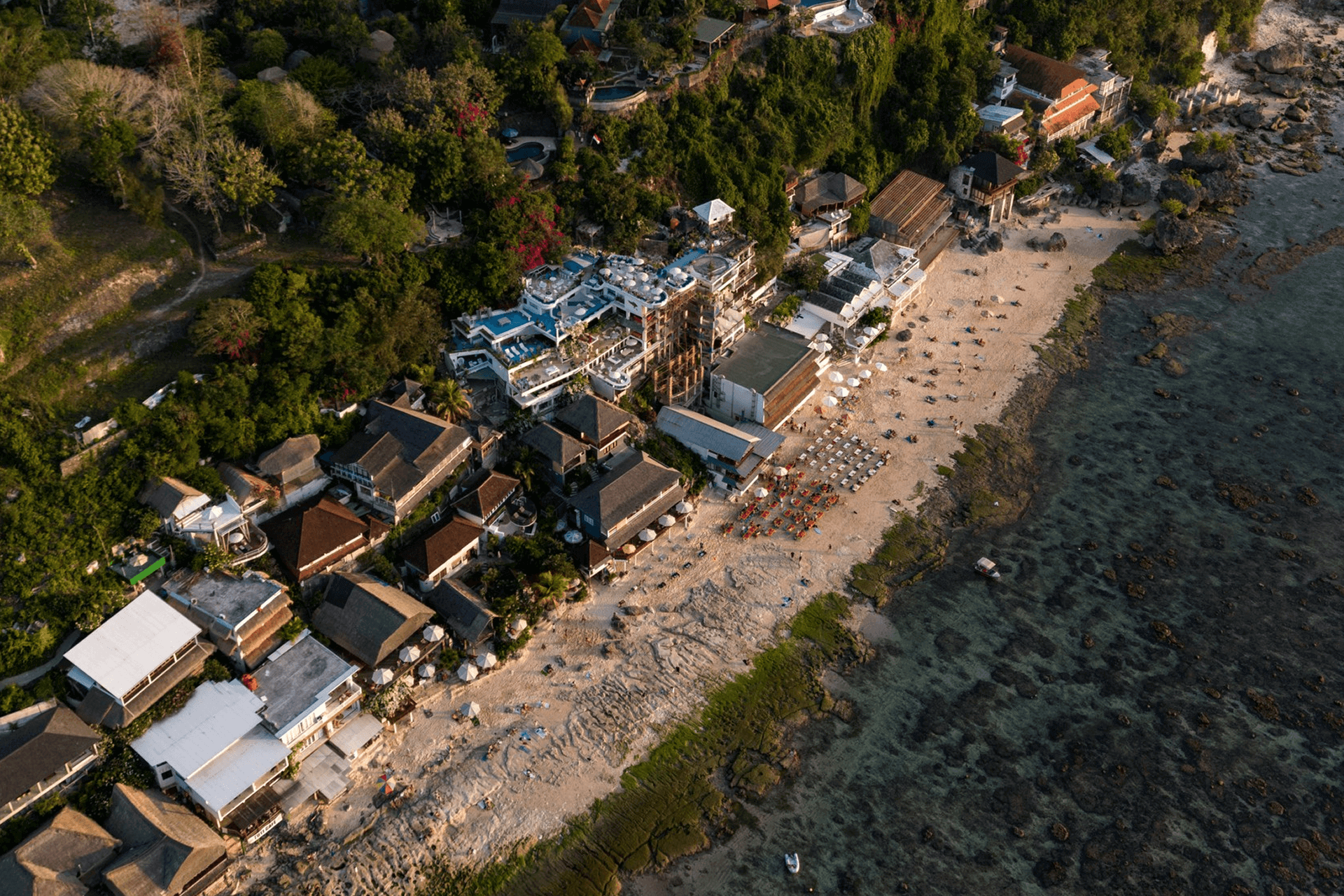
Recent demolitions of cafés and guesthouses on Bingin Beach and the freeze on projects in green zones have reignited debate over how construction is regulated in Bali – and whether it is truly enforced.
Like Bali’s traffic, development may seem lawless at first glance. Yet behind the apparent chaos lies a master zoning plan and regulations set by local authorities to ensure long-term balance between tourism, environment, and community needs.
Tourism zones are subject to clear rules: buildings may not exceed 15 meters, no more than 50% of a plot can be developed, at least 30% must remain green space, and 20% is reserved for roads. Projects on the coast must be 100 meters from the high-tide line; if built on a cliff, the setback must equal the cliff’s height multiplied by two.
In practice, projects fall into three groups: fully legal with all permits; partially compliant with some violations; or completely illegal, such as those in green zones where construction is banned. The second category is the most complex, shaped by Bali’s legalization process. Developers must obtain a pre-construction permit (PGB) and, after completion, a certificate (SLF) valid for five years. The SLF confirms compliance and grants operational legitimacy.
Yet ambiguity remains. SLFs are sometimes issued even with violations, provided fines are paid or corrections are made within a deadline. One beach club was ordered to remove a pool less than 100 meters from the shoreline; others must contribute annual fees for failing to meet green-space quotas. Crucially, renewal of the SLF is never guaranteed.
This system reflects both strained regulators and choices made by developers. Some pursue short-term profits by increasing density or building in cheaper green zones, betting that enforcement will be slow or inconsistent.
For foreign investors, the message is clear: the era of “it worked before, it will work again” is ending. Navigating Bali’s construction landscape demands due diligence, reliable local advisors, and strict adherence to zoning rules. Anything less risks fines, demolition, or the loss of operating rights.
Like Bali’s traffic, development may seem lawless at first glance. Yet behind the apparent chaos lies a master zoning plan and regulations set by local authorities to ensure long-term balance between tourism, environment, and community needs.
Tourism zones are subject to clear rules: buildings may not exceed 15 meters, no more than 50% of a plot can be developed, at least 30% must remain green space, and 20% is reserved for roads. Projects on the coast must be 100 meters from the high-tide line; if built on a cliff, the setback must equal the cliff’s height multiplied by two.
In practice, projects fall into three groups: fully legal with all permits; partially compliant with some violations; or completely illegal, such as those in green zones where construction is banned. The second category is the most complex, shaped by Bali’s legalization process. Developers must obtain a pre-construction permit (PGB) and, after completion, a certificate (SLF) valid for five years. The SLF confirms compliance and grants operational legitimacy.
Yet ambiguity remains. SLFs are sometimes issued even with violations, provided fines are paid or corrections are made within a deadline. One beach club was ordered to remove a pool less than 100 meters from the shoreline; others must contribute annual fees for failing to meet green-space quotas. Crucially, renewal of the SLF is never guaranteed.
This system reflects both strained regulators and choices made by developers. Some pursue short-term profits by increasing density or building in cheaper green zones, betting that enforcement will be slow or inconsistent.
For foreign investors, the message is clear: the era of “it worked before, it will work again” is ending. Navigating Bali’s construction landscape demands due diligence, reliable local advisors, and strict adherence to zoning rules. Anything less risks fines, demolition, or the loss of operating rights.


